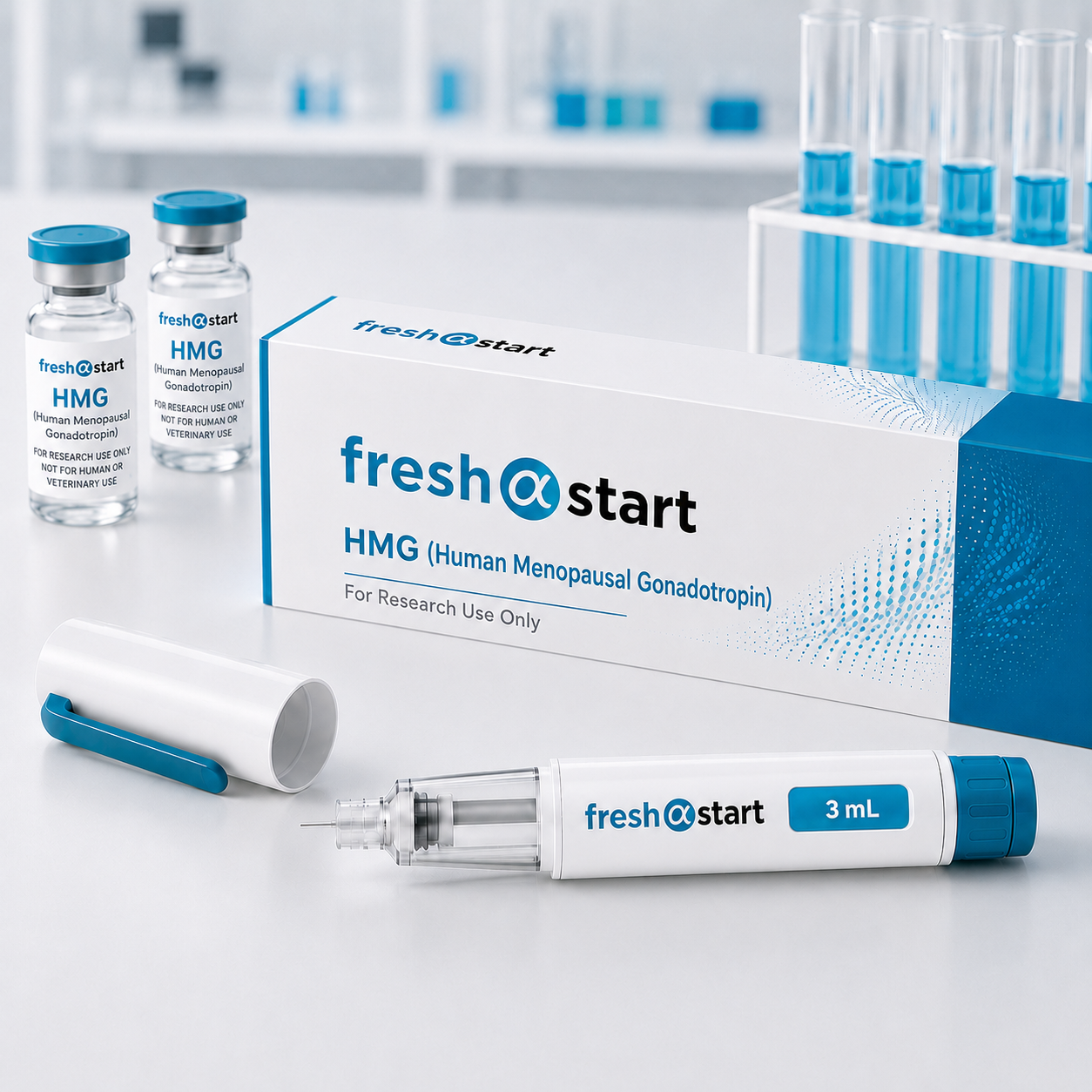
HMG (Human Menopausal Gonadotropin)
Price range: £25.00 through £45.00
CAS No: On request
Strengths Available: 20mg
Format: Sealed containment / vial presentations available
Volume: 3mL
What This Product Is About
HMG (Human Menopausal Gonadotropin) is referenced in research focused on reproductive biology and hormonal signalling pathways. It has attracted scientific attention as a research tool for exploring how reproductive and endocrine pathways are regulated.
Description
What is HMG?
HMG (Human Menopausal Gonadotropin) is a research-grade peptide studied in the context of reproductive and hormonal-signalling research. Investigators have explored how HMG (Human Menopausal Gonadotropin) interacts with receptors and pathways involved in reproductive and endocrine regulation in laboratory models.
Why Researchers Became Interested in HMG (Human Menopausal Gonadotropin)
Researchers became interested in HMG (Human Menopausal Gonadotropin) because of its relevance to reproductive and hormonal-signalling research. It provides a defined research tool for examining endocrine pathways in experimental models.
Key Research Focus Areas
- Reproductive and endocrine signalling models
- Hormonal-axis regulation studies
- Receptor-binding and pathway investigations
- Behavioural and neuroendocrine research
- Sexual-health research models
- Hypothalamic–pituitary signalling research
What the Research Has Shown
In preclinical research, HMG (Human Menopausal Gonadotropin) has been studied for its influence on reproductive and hormonal-signalling pathways. Mechanistic studies have explored its interaction with receptors central to endocrine regulation.
Scientific Background and Research Context
Human Menopausal Gonadotropin, commonly abbreviated as HMG and also known as menotropins, is a biologically active gonadotropin preparation containing both follicle-stimulating hormone (FSH) and luteinising hormone (LH) activity. Traditionally, HMG is purified from the urine of postmenopausal women, in whom circulating levels of FSH and LH naturally rise following the decline of ovarian hormone production. Modern preparations undergo extensive purification and biological standardisation to provide defined levels of gonadotropic activity.
HMG has become an important subject in reproductive endocrinology because it provides researchers with a method of examining how combined FSH and LH signalling influences gonadal function. Its activity is closely associated with the hypothalamic–pituitary–gonadal axis, the hormonal network responsible for regulating follicular development, steroid hormone production, ovulation and spermatogenesis.
Exploring the Science Behind HMG
The FSH component of HMG primarily interacts with FSH receptors located on ovarian granulosa cells. This signalling supports the recruitment, growth and maturation of ovarian follicles while contributing to the production of estradiol and other factors involved in follicular development. FSH is therefore considered a central regulator of the early and intermediate stages of folliculogenesis.
The LH activity within HMG complements FSH signalling by acting on LH receptors involved in gonadal steroid production and later stages of follicular maturation. Together, these hormonal activities create a broader gonadotropic signal than preparations containing FSH alone. In controlled clinical protocols, HMG generally promotes follicular growth and maturation, while a separate ovulatory trigger may be required once appropriate follicular development has been achieved.
The interaction between FSH and LH activity remains a significant research area. Scientists continue to investigate how differences in receptor sensitivity, endogenous hormone concentrations, follicular reserve and individual endocrine profiles may influence the biological response to gonadotropin stimulation.
Research Context in Endocrine and Reproductive Science
HMG is widely studied in models of controlled ovarian stimulation, ovulatory dysfunction and assisted reproductive technology. Research commonly examines follicular recruitment, estradiol production, oocyte maturation and the coordination of hormonal signals throughout the ovarian cycle. These investigations have helped improve scientific understanding of how externally supplied gonadotropins interact with natural reproductive hormone pathways.
In male reproductive research, gonadotropin-based protocols have also been investigated in connection with hypogonadotropic hypogonadism and impaired spermatogenesis. In this context, FSH activity may support Sertoli-cell function and sperm development, while LH-like signalling—often supplied through human chorionic gonadotropin—supports intratesticular testosterone production. Combined gonadotropin approaches have therefore been studied as a method of restoring reproductive signalling when natural pituitary gonadotropin production is insufficient.
Because HMG directly influences hormonally sensitive tissues, laboratory and clinical investigations require precise biological standardisation and careful monitoring of endocrine responses. The compound is considered a potent gonadotropic substance rather than a general wellness or nutritional product.
Ongoing Scientific Interest
Scientific interest in HMG continues as researchers compare urinary-derived gonadotropins with recombinant FSH and LH preparations. Areas of investigation include hormone purity, glycosylation patterns, receptor activation, pharmacokinetic behaviour and differences in individual biological response.
Researchers are also studying how the relative balance of FSH and LH activity may influence follicular recruitment, steroidogenesis, oocyte development and reproductive outcomes. Additional attention is directed toward identifying biological markers that could help predict gonadotropin sensitivity and support more individualised research protocols.
Safety remains an essential part of HMG research because excessive ovarian response can be associated with ovarian hyperstimulation syndrome, multiple follicular development and other clinically significant complications. For this reason, approved menotropin products are prescription medicines intended for administration under the supervision of clinicians experienced in reproductive endocrinology.
HMG remains a valuable research tool for exploring the interaction between pituitary hormones, gonadal receptors and reproductive physiology. Continued investigation may provide further insight into follicular development, spermatogenesis and the broader regulation of the human reproductive endocrine system.
Ingredient Profile
Single research compound: Human Menopausal Gonadotropin
CAS: On request
Supplied as lyophilised powder (no excipients, fillers or additives).
Active Ingredients
Human Menopausal Gonadotropin— 75iu
Ingredient Breakdown
Human Menopausal Gonadotropin: 75iu of active peptide per vial (lyophilised).
Why is HMG (Human Menopausal Gonadotropin) studied in hormonal-signalling research?
Because studies have explored its relevance to reproductive and hormonal-signalling pathways.
Is HMG (Human Menopausal Gonadotropin) approved for medical use?
No. It is supplied strictly for research and laboratory use only, and is not intended for human or veterinary use.
Why does purity matter so much for this product?
High purity helps ensure that observed research effects are due to the material itself rather than impurities.
What does ‘research grade’ mean?
It means the product is supplied with documentation and traceability for laboratory investigation.
Is international supply available?
Yes. International fulfilment and temperature-controlled shipping can be supported where appropriate.
Research & laboratory use only. Not for human or veterinary use. Not a medicinal product, supplement, food or medical device. No therapeutic, diagnostic, cosmetic, wellness or lifestyle claims are made or implied. Analytical reference/click information is a laboratory measurement aid only and must not be applied to living systems.
Typically supplied at >99% purity, supported by batch-specific analytical data. UK-based preparation, analysis and release under scientist-led, GMP-aligned processes with full batch-level traceability. Certificate of Analysis (CoA) available on request; independent analytical verification where appropriate.
Store the lyophilised powder refrigerated at 2–8°C, protected from light and moisture; suitable for longer-term storage frozen at -20°C. Handle under appropriate laboratory conditions. For in vitro research use only.
For in vitro laboratory research only. Reconstitution, handling and experimental design at the discretion of the qualified researcher. The 300-click sealed-containment system is an analytical measurement reference only and does not represent dosing or administration guidance. Not for use in living systems.
Partner with FreshstartPharma– Where Accuracy Meets Innovation
Freshstartpharma is committed to delivering high-quality research-grade products designed for advanced scientific applications. We offer wholesale partnerships to selected businesses that share our values of integrity, quality, and innovation. Whether you’re an established distributor or an emerging research supply company, we invite you to join our network and benefit from exclusive access to our state-of-the-art product range.
Related Products
Cagrilintide
Tirzepatide
PT-141