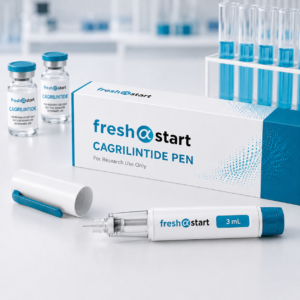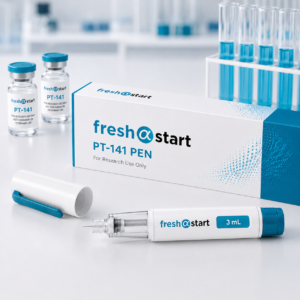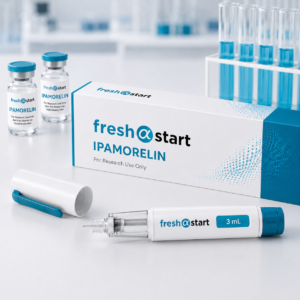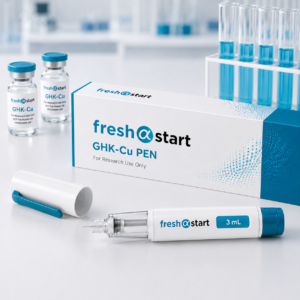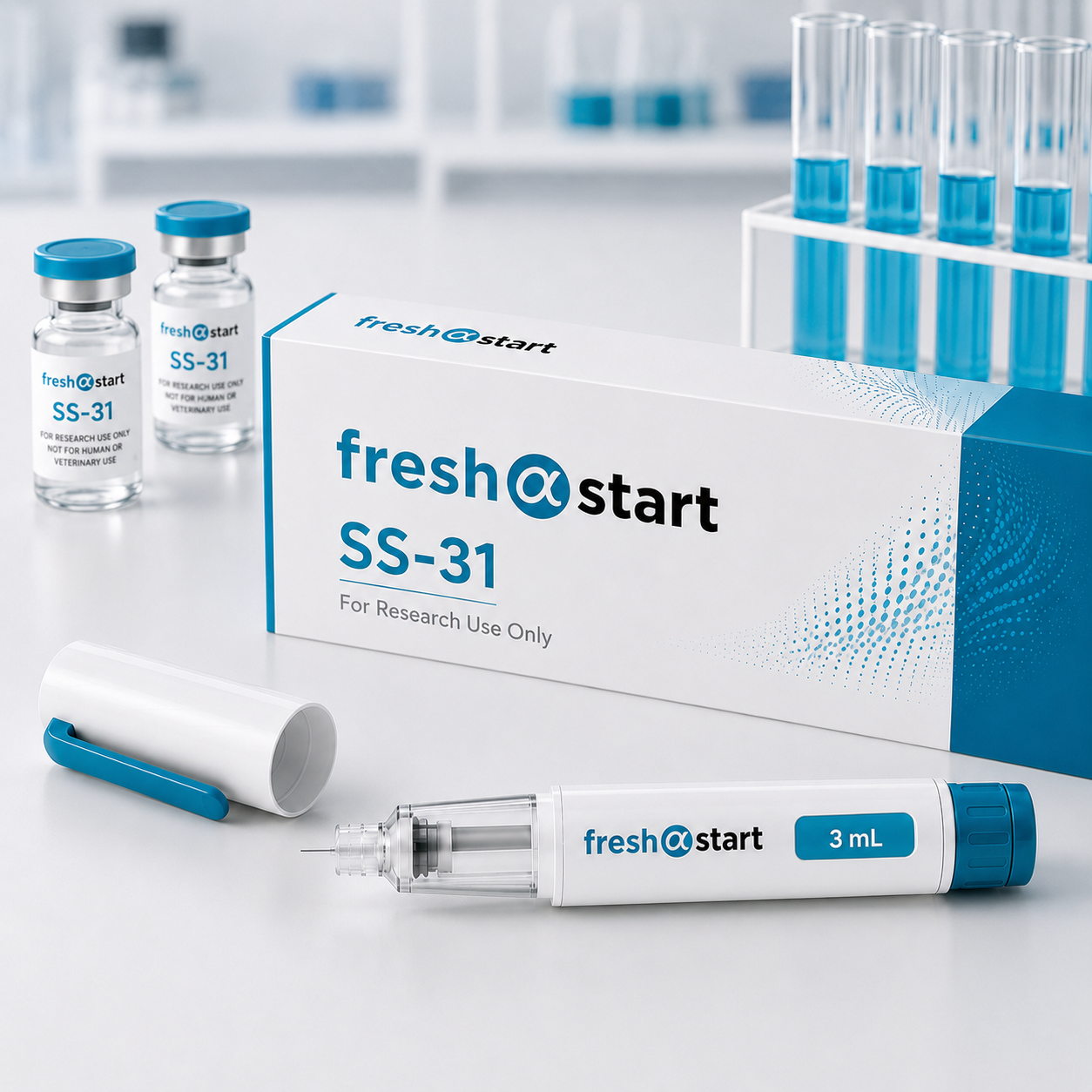

SS-31
CAS Number: 736992-21-5
Strengths Available: 10mg/50mg
Format: Sealed containment / vial presentations available
Volume: 3mL
What This Product Is About
SS-31 is a short, mitochondria-targeted tetrapeptide that has attracted significant scientific interest for its role in cellular energy and mitochondrial function research. It is studied for how it interacts with mitochondrial membranes, allowing researchers to explore bioenergetics, oxidative stress pathways, and cellular resilience under controlled laboratory conditions.
Description
What is SS-31?
SS-31 is a small peptide designed to selectively localise within mitochondria—the energy-producing structures inside cells.
In simple terms, it helps researchers study how cells produce energy and respond to stress at a mitochondrial level.
Why SS-31 Attracted Research Interest
Scientific interest in SS-31 centres on its unique ability to target mitochondria directly, rather than acting broadly throughout the cell.
Key Research Focus Areas
- Mitochondrial bioenergetics research
- Cellular energy production and efficiency studies
- Oxidative stress and mitochondrial resilience pathways
- Age-related mitochondrial function research
- Cellular stress adaptation and recovery models
What the Research Has Shown
Research literature has examined SS-31’s interaction with mitochondrial membranes and its influence on cellular energy efficiency in experimental models.
Studies suggest SS-31 may help stabilise mitochondrial function under stress conditions, making it a valuable tool for studying cellular resilience. These findings describe biological mechanisms explored in research environments and do not constitute approved medical, therapeutic, or longevity claims.
Scientific Background and Mechanism of Action of SS-31
SS-31, also known as elamipretide, is a synthetic mitochondria-targeted peptide studied for its role in mitochondrial function, cellular energy production, oxidative stress, and age-related cellular decline. It is commonly discussed in research connected to mitochondrial biology, metabolic health, neurodegeneration, muscle function, and cellular resilience.
Scientific Background
Mitochondria are responsible for producing most of the cell’s energy in the form of ATP. They also play an important role in oxidative balance, cell signalling, apoptosis, and tissue function. When mitochondrial function becomes impaired, cells may experience reduced energy output, increased oxidative stress, and disrupted metabolic activity.
SS-31 attracted research interest because it was designed to selectively target mitochondria. Unlike many compounds that act broadly within the cell, SS-31 has been studied for its ability to interact with the inner mitochondrial membrane, particularly with cardiolipin, a phospholipid essential for normal mitochondrial structure and electron transport chain function.
Because mitochondrial dysfunction is associated with ageing, metabolic stress, cardiovascular disease, neurodegenerative processes, and muscle decline, SS-31 has become an important compound in mitochondrial research.
Mechanism of Action
SS-31 is believed to act primarily by targeting the inner mitochondrial membrane and supporting mitochondrial stability. A key area of research focuses on its interaction with cardiolipin, which helps maintain the structure and function of mitochondrial respiratory-chain complexes.
By supporting cardiolipin function and mitochondrial membrane integrity, SS-31 has been studied for its potential influence on:
- mitochondrial energy production
- ATP synthesis
- oxidative stress regulation
- electron transport chain efficiency
- mitochondrial membrane stability
- cellular repair and survival pathways
- reduction of reactive oxygen species
- protection of tissues under metabolic or oxidative stress
In research models, SS-31 has been investigated for its ability to improve mitochondrial efficiency and reduce oxidative damage without directly blocking normal cellular signalling. This makes it especially relevant in studies where mitochondrial stress and energy imbalance are key biological factors.
Research Context
SS-31 is commonly studied in relation to mitochondrial dysfunction, ageing biology, metabolic stress, cardiovascular research, skeletal muscle performance, kidney injury models, and neuroprotective pathways. Its research value comes from its targeted activity at the mitochondrial level, rather than acting as a general antioxidant.
The compound is also of interest because mitochondrial dysfunction is involved in many chronic and age-related biological processes. Researchers continue to explore whether supporting mitochondrial membrane stability may influence cellular energy balance, tissue resilience, and recovery from oxidative stress.
Overall, SS-31 is best understood as a mitochondria-targeted research peptide used to study mitochondrial health, oxidative stress, energy metabolism, and cellular protection pathways.
For research and laboratory use only. Not for human or veterinary use
Ingredient Profile
Single research compound: SS-31
CAS: 736992-21-5
Purity >99%
Supplied as lyophilised powder (no excipients, fillers or additives).
Active Ingredients
SS-31 — 10mg / 50mg
Ingredient Breakdown
SS-31: 10mg / 50mg of active peptide per vial (lyophilised).
What type of peptide is SS-31?
SS-31 is a short, mitochondria-targeted tetrapeptide studied in cellular energy research.
Is SS-31 also known by another name?
Yes. It is often referred to as Elamipretide in scientific literature.
Why is mitochondrial targeting important?
Because mitochondria play a central role in cellular energy production and stress response.
Does SS-31 act on the whole cell?
It preferentially localises to mitochondria rather than acting broadly throughout the cell.
Is SS-31 approved for medical use?
No. It is supplied strictly for research and laboratory use only, and is not intended for human or veterinary use.
Why does purity matter so much for this product?
High purity helps ensure that observed research effects are due to the material itself rather than impurities.
What does ‘research grade ‘ mean?
It means the product is supplied with documentation and traceability for laboratory investigation.
Is international supply available?
Yes. International fulfilment and temperature-controlled shipping can be supported where appropriate.
Research & laboratory use only. Not for human or veterinary use. Not a medicinal product, supplement, food or medical device. No therapeutic, diagnostic, cosmetic, wellness or lifestyle claims are made or implied. Analytical reference/click information is a laboratory measurement aid only and must not be applied to living systems.
Typically supplied at >99% purity, supported by batch-specific analytical data. UK-based preparation, analysis and release under scientist-led, GMP-aligned processes with full batch-level traceability. Certificate of Analysis (CoA) available on request; independent analytical verification where appropriate.
Store the lyophilised powder refrigerated at 2–8°C, protected from light and moisture; suitable for longer-term storage frozen at -20°C. Handle under appropriate laboratory conditions. For in vitro research use only.
For in vitro laboratory research only. Reconstitution, handling and experimental design at the discretion of the qualified researcher. The 300-click sealed-containment system is an analytical measurement reference only and does not represent dosing or administration guidance. Not for use in living systems.
Partner with FreshstartPharma– Where Accuracy Meets Innovation
Freshstartpharma is committed to delivering high-quality research-grade products designed for advanced scientific applications. We offer wholesale partnerships to selected businesses that share our values of integrity, quality, and innovation. Whether you’re an established distributor or an emerging research supply company, we invite you to join our network and benefit from exclusive access to our state-of-the-art product range.