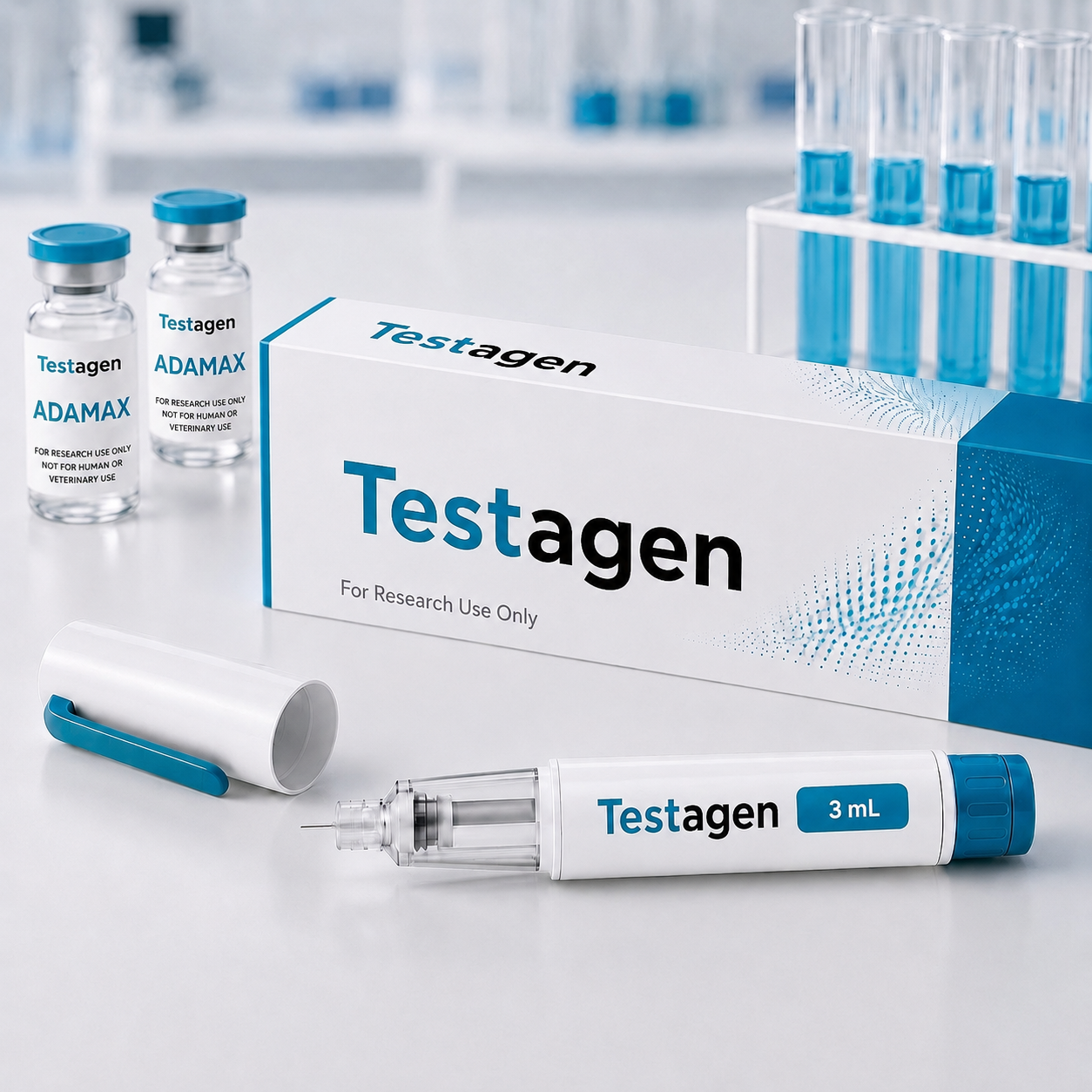
Testagen
CAS No: 1026993-38-3
Strengths Available: 5mg/10mg
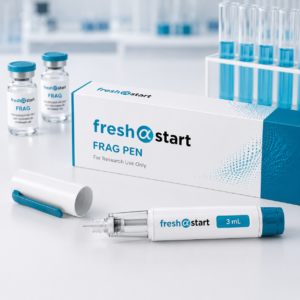
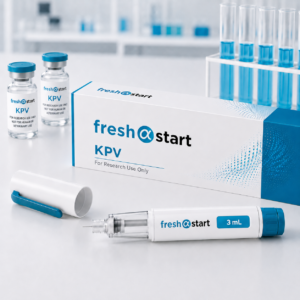
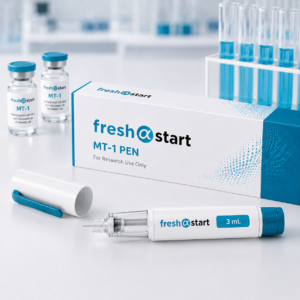
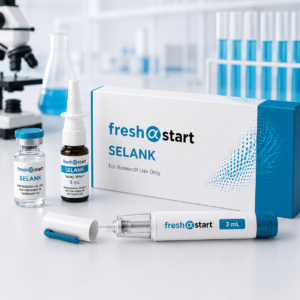
Format: Sealed containment / vial presentations available
Volume: 3mL
What This Product Is About
Testagen is the research name commonly used for KEDG, a synthetic tetrapeptide composed of lysine, glutamic acid, aspartic acid and glycine. It belongs to a group of ultrashort peptides studied for their potential interactions with cellular transport systems, DNA-associated processes, gene expression and endocrine-tissue models.
Description
What is Testagen?
Testagen is a four-amino-acid peptide with the sequence Lys–Glu–Asp–Gly.
It was developed within research involving short peptide bioregulators. Published KEDG studies have examined cellular uptake, peptide–DNA interactions, cell differentiation and endocrine responses in experimental animal models.
Testagen is not testosterone, does not contain testosterone and should not be described as a form of testosterone replacement.
Why Researchers Became Interested in Testagen
Researchers became interested in Testagen because ultrashort peptides may interact with cellular membranes, transport proteins, chromatin and regulatory regions of DNA.
KEDG has also been investigated in experimental models involving pituitary and thyroid function. These studies created interest in its potential relationship with endocrine signalling, cellular regulation and age-associated changes.
However, the available evidence remains predominantly laboratory-based, computational or derived from non-human models.
Key Research Focus Areas
- Ultrashort peptide biology
- Cellular peptide transport
- Peptide–DNA interactions
- Chromatin and gene-expression research
- Pituitary and thyroid models
- Endocrine signalling
- Cell differentiation
- Immune-cell research
- Age-related cellular changes
- Peptide stability and degradation
- Structure–activity relationships
- Analytical peptide characterisation
What the Research Has Shown
Laboratory research has examined whether KEDG can enter cells and interact with DNA-associated structures. Fluorescence-based experiments have reported intracellular localisation and sequence-dependent interactions with model oligonucleotides.
Animal studies involving hypophysectomised chickens investigated KEDG alongside other short peptides. Some studies reported changes in thyroid structure and circulating thyroid-related hormones. These findings were obtained in specialised non-human models and do not establish clinical effectiveness in people.
Computational research has also explored possible interactions between KEDG and amino-acid or peptide transporters, including LAT and PEPT transporter families. These results are theoretical and require confirmation through additional laboratory and in-vivo research.
Published evidence does not currently establish Testagen as a clinically proven method for increasing testosterone, restoring testicular function, improving fertility or treating an endocrine disorder.
Scientific Background and Research Context
Testagen is a synthetic tetrapeptide with the amino-acid sequence Lys–Glu–Asp–Gly, abbreviated as KEDG. Its small structure distinguishes it from larger peptide hormones and proteins.
Early KEDG research developed from investigations into low-molecular-weight peptide fractions associated with pituitary tissues. Researchers synthesised defined short sequences to examine whether individual peptides could reproduce measurable biological effects under controlled experimental conditions.
KEDG contains both positively and negatively charged amino-acid residues. Lysine contributes a basic side chain, while glutamic acid and aspartic acid contribute acidic groups. These structural characteristics may influence solubility, molecular interactions, transporter binding and association with charged biological structures.
Because Testagen contains only four amino acids, analytical identity should be confirmed through methods such as mass spectrometry and peptide-sequence verification rather than relying exclusively on the commercial product name.
Exploring the Science Behind
Research into Testagen focuses on the broader hypothesis that ultrashort peptides may influence cellular activity through interactions with transport systems, proteins, histones or DNA.
Fluorescence-labelled peptide studies have investigated the movement of KEDG into cellular and nuclear environments. Other experimental work has examined whether the peptide interacts preferentially with particular short DNA sequences.
These observations have led researchers to explore possible effects on chromatin accessibility and gene transcription. However, a physical interaction observed under laboratory conditions does not automatically demonstrate meaningful regulation in living tissues.
Computational modelling has additionally examined whether KEDG could interact with LAT1, LAT2, PEPT1 and related transport proteins. These studies generate testable hypotheses about peptide transport but do not independently confirm cellular uptake, biological activity or therapeutic effects.
Research Context in Endocrine and Metabolic Science
Testagen is primarily discussed in endocrine research because KEDG has been evaluated in experimental pituitary–thyroid models.
Studies involving hypophysectomised birds reported changes in thyroid morphology and hormone-related measurements after administration of KEDG and other short peptides. These models were designed to investigate disrupted pituitary signalling and cannot be directly translated into routine human endocrine care.
Despite its commercial name, the currently available published research does not establish Testagen as a testicular hormone, testosterone analogue or selective regulator of human reproductive function.
Research into testosterone production, fertility or testicular biology would require direct evidence from validated reproductive-cell models, appropriate animal studies and controlled human clinical trials. Such evidence remains limited.
Ongoing Scientific Interest
Scientific interest continues around how very short peptides enter cells, resist enzymatic degradation and interact with intracellular targets.
Researchers are studying whether effects attributed to KEDG depend on concentration, exposure time, cell type, transporter availability or specific nucleotide sequences. The reproducibility and biological significance of reported peptide–DNA interactions also require further investigation.
Other areas of interest include peptide stability, pharmacokinetics, tissue distribution, gene-expression profiling and comparisons between KEDG and structurally related short peptides.
Further independent research is needed to determine whether the preliminary findings can be reproduced in mammalian systems and whether they have any relevance to human physiology.
Ingredient Profile
Single research compound: Testagen
CAS: 1026993-38-3
Supplied as lyophilised powder (no excipients, fillers or additives).
Active Ingredients
Testagen — 5 mg / 10 mg
Ingredient Breakdown
Testagen: 5 mg / 10 mg of active peptide per vial (lyophilised).
Why is Testagen studied in endocrine research?
Testagen is studied because KEDG has been investigated in experimental models involving pituitary signalling, thyroid structure and hormone-related measurements. The available evidence is mainly preclinical and does not establish a human treatment benefit.
Is Testagen the same as testosterone?
No. Testagen is a four-amino-acid synthetic peptide. It is chemically and biologically different from testosterone, which is a steroid hormone.
Is Testagen approved for medical use?
Testagen/KEDG is not presented as an approved medicinal product and has no established authorised therapeutic indication. It is supplied strictly as a laboratory research material.
Has Testagen been proven to increase testosterone?
No reliable clinical evidence currently establishes Testagen as a proven method for increasing testosterone in humans. Claims about testosterone production, fertility or testicular restoration should not be presented as established findings.
Why does purity matter so much for this product?
Peptide impurities, truncated sequences, deletion products, oxidation, residual synthesis reagents or microbial contamination can interfere with experimental results. Identity and purity should be supported by appropriate analytical testing.
What does “research grade” mean?
Research grade means the material is intended for laboratory, analytical or experimental use. It does not mean the product is pharmaceutical grade, sterile or suitable for administration to humans or animals.
Is international supply available?
International availability depends on product classification, destination-country regulations, customs requirements and restrictions affecting laboratory research materials.
Research & laboratory use only. Not for human or veterinary use. Not a medicinal product, supplement, food or medical device. No therapeutic, diagnostic, cosmetic, wellness or lifestyle claims are made or implied. Analytical reference/click information is a laboratory measurement aid only and must not be applied to living systems.
Typically supplied at >99% purity, supported by batch-specific analytical data. UK-based preparation, analysis and release under scientist-led, GMP-aligned processes with full batch-level traceability. Certificate of Analysis (CoA) available on request; independent analytical verification where appropriate.
Store the lyophilised powder refrigerated at 2–8°C, protected from light and moisture; suitable for longer-term storage frozen at -20°C. Handle under appropriate laboratory conditions. For in vitro research use only.
For in vitro laboratory research only. Reconstitution, handling and experimental design at the discretion of the qualified researcher. The 300-click sealed-containment system is an analytical measurement reference only and does not represent dosing or administration guidance. Not for use in living systems.
Partner with FreshstartPharma– Where Accuracy Meets Innovation
Freshstartpharma is committed to delivering high-quality research-grade products designed for advanced scientific applications. We offer wholesale partnerships to selected businesses that share our values of integrity, quality, and innovation. Whether you’re an established distributor or an emerging research supply company, we invite you to join our network and benefit from exclusive access to our state-of-the-art product range.