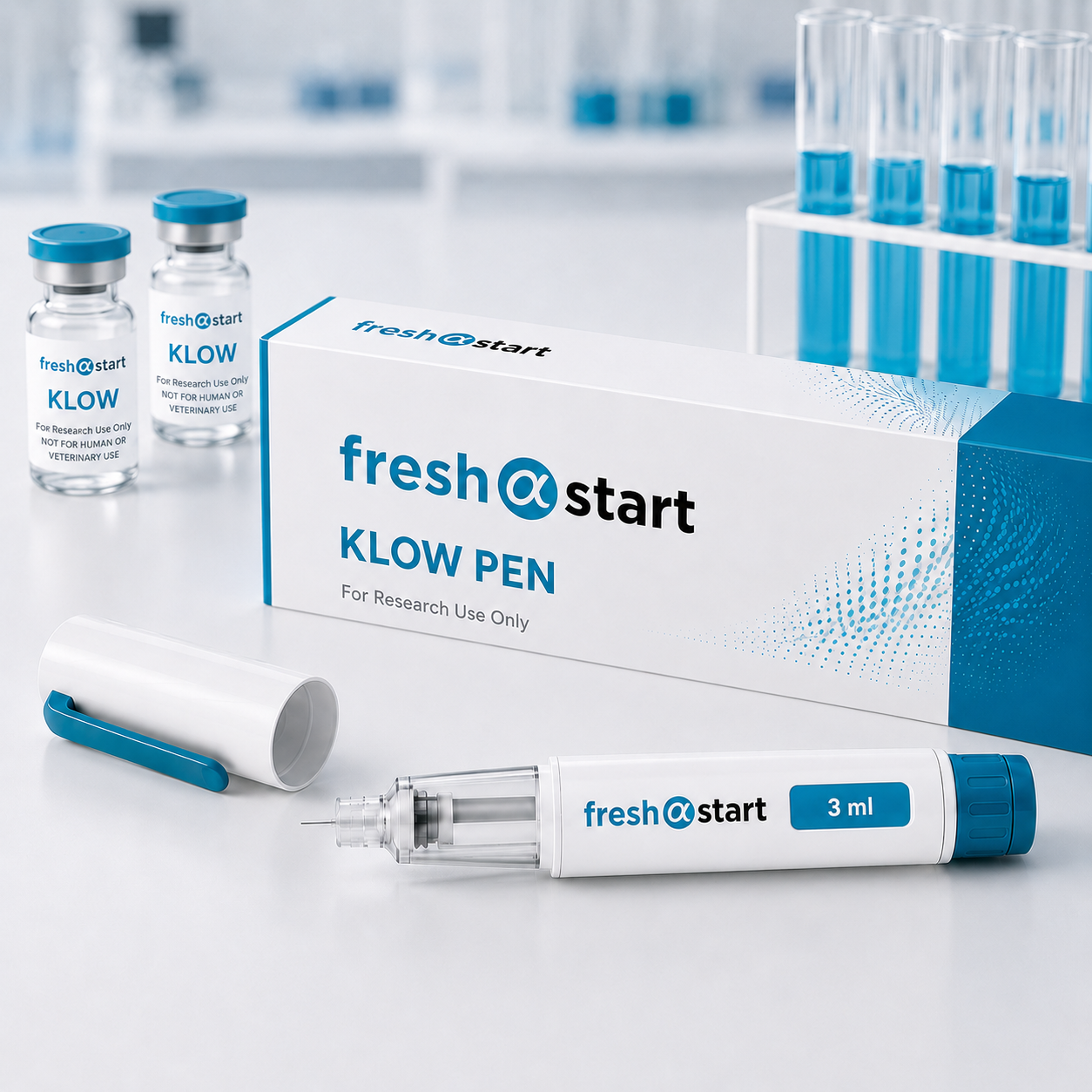
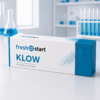
KLOW
CAS Number: 89030-95-5 / 137525-51-0 / 885340-08-9 / 67763-96-6
Strengths Available: 80 mg
Format: Sealed containment / vial presentations available
Volume: 2mL/3mL
What This Combination Is About
The KLOW Combo is a comprehensive multi‑peptide research formulation designed for advanced investigation into tissue repair, skin biology, inflammatory modulation, and regenerative signalling.
GHK‑Cu (25 mg) A copper‑binding peptide studied for its role in cellular repair signalling, collagen synthesis, extracellular matrix remodelling, and skin and connective tissue biology.
BPC‑157 (5 mg) A synthetic peptide fragment investigated for its involvement in tissue integrity, angiogenesis, and gastrointestinal and musculoskeletal repair pathways.
TB‑500 (5 mg) A synthetic fragment related to thymosin beta‑4, studied for its role in cell migration, cytoskeletal organisation, and regenerative signalling.
KPV (5 mg) A tripeptide derived from alpha‑melanocyte‑stimulating hormone (α‑MSH), widely researched for its role in inflammatory modulation, barrier function, and immune‑signalling pathways.
Description
What This Combination Is About
The KLOW Combo is a comprehensive multi‑peptide research formulation designed for advanced investigation into tissue repair, skin biology, inflammatory modulation, and regenerative signalling. It builds upon the foundational Glow Combo by incorporating KPV, a peptide widely discussed in inflammation‑related and barrier‑function research, creating a broader platform for studying coordinated biological repair pathways.
GHK‑Cu (25 mg) A copper‑binding peptide studied for its role in cellular repair signalling, collagen synthesis, extracellular matrix remodelling, and skin and connective tissue biology.
BPC‑157 (5 mg) A synthetic peptide fragment investigated for its involvement in tissue integrity, angiogenesis, and gastrointestinal and musculoskeletal repair pathways.
TB‑500 (5 mg) A synthetic fragment related to thymosin beta‑4, studied for its role in cell migration, cytoskeletal organisation, and regenerative signalling.
KPV (5 mg) A tripeptide derived from alpha‑melanocyte‑stimulating hormone (α‑MSH), widely researched for its role in inflammatory modulation, barrier function, and immune‑signalling pathways.
Why Researchers Study This Combination
- Exploration of multi‐pathway tissue repair and regeneration
- Study of skin, connective tissue, and epithelial biology
- Investigation of inflammatory signalling and modulation pathways
- Research into angiogenesis, cellular migration, and matrix remodelling
- Examination of coordinated regenerative and protective signalling in experimental models bypassing natural feedback systems
What the Research Suggests
Each component of the KLOW Combo has been independently studied in laboratory settings for its role in repair, regeneration, inflammatory regulation, and structural biology. Interest in combining these peptides arises from their involvement in overlapping yet distinct biological pathways, allowing researchers to explore how regenerative and protective signals interact. These observations describe biological mechanisms explored in research environments and do not represent approved medical, cosmetic, or therapeutic claims.
Scientific Background and Mechanism of Action
KLOW is a multi-peptide research compound combining BPC-157, TB-500, GHK-Cu, and KPV. Each peptide is studied in relation to different biological pathways involved in tissue response, extracellular matrix regulation, inflammation signalling, angiogenesis, cellular migration, and repair-associated processes.
From a research perspective, the scientific interest in this combination comes from the idea that tissue repair is not controlled by one pathway alone. It involves several coordinated processes, including inflammatory control, blood-vessel signalling, fibroblast activity, collagen organisation, epithelial response, and cellular movement. KLOW brings together peptides that are commonly discussed in these overlapping areas of regenerative and inflammatory research.
Exploring the Science Behind the Combination
The scientific concept behind KLOW is based on multi-pathway repair biology.
BPC-157 is often investigated for its possible influence on tissue integrity, vascular response, nitric-oxide-related pathways, and repair signalling. TB-500, through its relationship to thymosin beta-4 biology, is studied in connection with actin dynamics, which are important for cell movement and tissue remodelling. GHK-Cu contributes a copper-dependent research angle, especially in relation to collagen, elastin, extracellular matrix balance, and oxidative stress. KPV adds an inflammation-focused component through its relationship to alpha-MSH-derived signalling.
Together, these peptides are commonly discussed in research areas involving:
- Connective-tissue biology
- Wound-repair models
- Extracellular matrix remodelling
- Inflammation regulation
- Angiogenesis and vascular response
- Fibroblast and epithelial-cell activity
- Collagen and elastin-related signalling
- Skin, soft-tissue, and musculoskeletal research
Research Context in Regenerative and Inflammatory Science
KLOW is best understood as a research formulation positioned around tissue-response science, rather than a single-pathway metabolic or hormone compound.
In regenerative research, tissue repair requires a balance between inflammation, cell migration, matrix deposition, and remodelling. For example, GHK-Cu has been studied for collagen and extracellular matrix regulation, while thymosin beta-4-related research has focused on angiogenesis, cell migration, and tissue protection.
KPV adds relevance to inflammatory models because alpha-MSH and related peptides have been investigated for anti-inflammatory effects in skin, eye, bowel, joint, and immune-related research contexts.
BPC-157 remains one of the more widely discussed experimental repair peptides, but current reviews emphasise that its research base is still developing and that strong clinical evidence is limited compared with established approved medicines.
Ongoing Scientific Interest
The ongoing interest in KLOW reflects the broader scientific movement toward studying repair and recovery as an integrated biological process. Instead of focusing only on one target, researchers are increasingly interested in how inflammatory signalling, extracellular matrix turnover, blood-vessel formation, oxidative stress, and cellular migration interact.
KLOW therefore sits within research areas such as regenerative biology, soft-tissue repair models, inflammatory-response research, skin and connective-tissue science, and peptide signalling studies.
It should be presented carefully as a single research compound made from multiple investigational peptides, not as an approved therapeutic treatment.
For research and laboratory use only. Not for human or veterinary use.
Ingredient Profile
Single research compound: KLOW. CAS: 89030-95-5. Purity >99%. Supplied as lyophilised powder (no excipients, fillers or additives).
Active Ingredients
KLOW — 10 / 10 / 50 / 10mg
Ingredient Breakdown
KLOW: 10 / 10 / 50 / 10mg of active peptide per vial (lyophilised).
Why is KLOW 80 (BPC-157 / TB-500 / GHK-CU / KPV) studied in repair and recovery research?
Because studies have explored how it influences repair and recovery responses across different tissue models.
Is KLOW 80 (BPC-157 / TB-500 / GHK-CU / KPV) approved for medical use?
No. It is supplied strictly for research and laboratory use only, and is not intended for human or veterinary use.
Why does purity matter so much for this product?
High purity helps ensure that observed research effects are due to the material itself rather than impurities.
What does ‘ research grade ‘ mean?
It means the product is supplied with documentation and traceability for laboratory investigation.
Is international supply available?
Yes. International fulfilment and temperature controlled shipping can be supported where appropriate.
Research & laboratory use only. Not for human or veterinary use. Not a medicinal product, supplement, food or medical device. No therapeutic, diagnostic, cosmetic, wellness or lifestyle claims are made or implied. Analytical reference/click information is a laboratory measurement aid only and must not be applied to living systems.
Typically supplied at >99% purity, supported by batch-specific analytical data. UK-based preparation, analysis and release under scientist-led, GMP-aligned processes with full batch-level traceability. Certificate of Analysis (CoA) available on request; independent analytical verification where appropriate.
Store the lyophilised powder refrigerated at 2–8°C, protected from light and moisture; suitable for longer-term storage frozen at -20°C. Handle under appropriate laboratory conditions. For in vitro research use only.
For in vitro laboratory research only. Reconstitution, handling and experimental design at the discretion of the qualified researcher. The 300-click sealed-containment system is an analytical measurement reference only and does not represent dosing or administration guidance. Not for use in living systems.
Partner with FreshstartPharma– Where Accuracy Meets Innovation
Freshstartpharma is committed to delivering high-quality research-grade products designed for advanced scientific applications. We offer wholesale partnerships to selected businesses that share our values of integrity, quality, and innovation. Whether you’re an established distributor or an emerging research supply company, we invite you to join our network and benefit from exclusive access to our state-of-the-art product range.