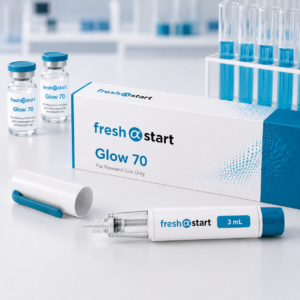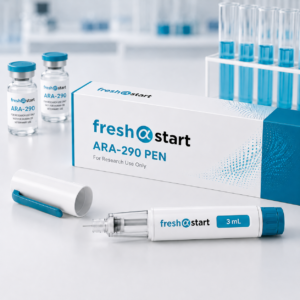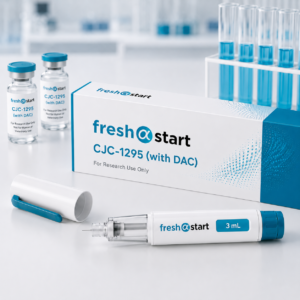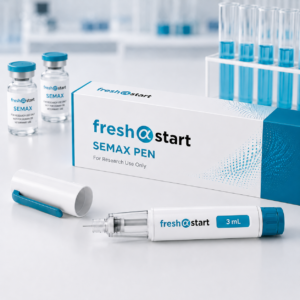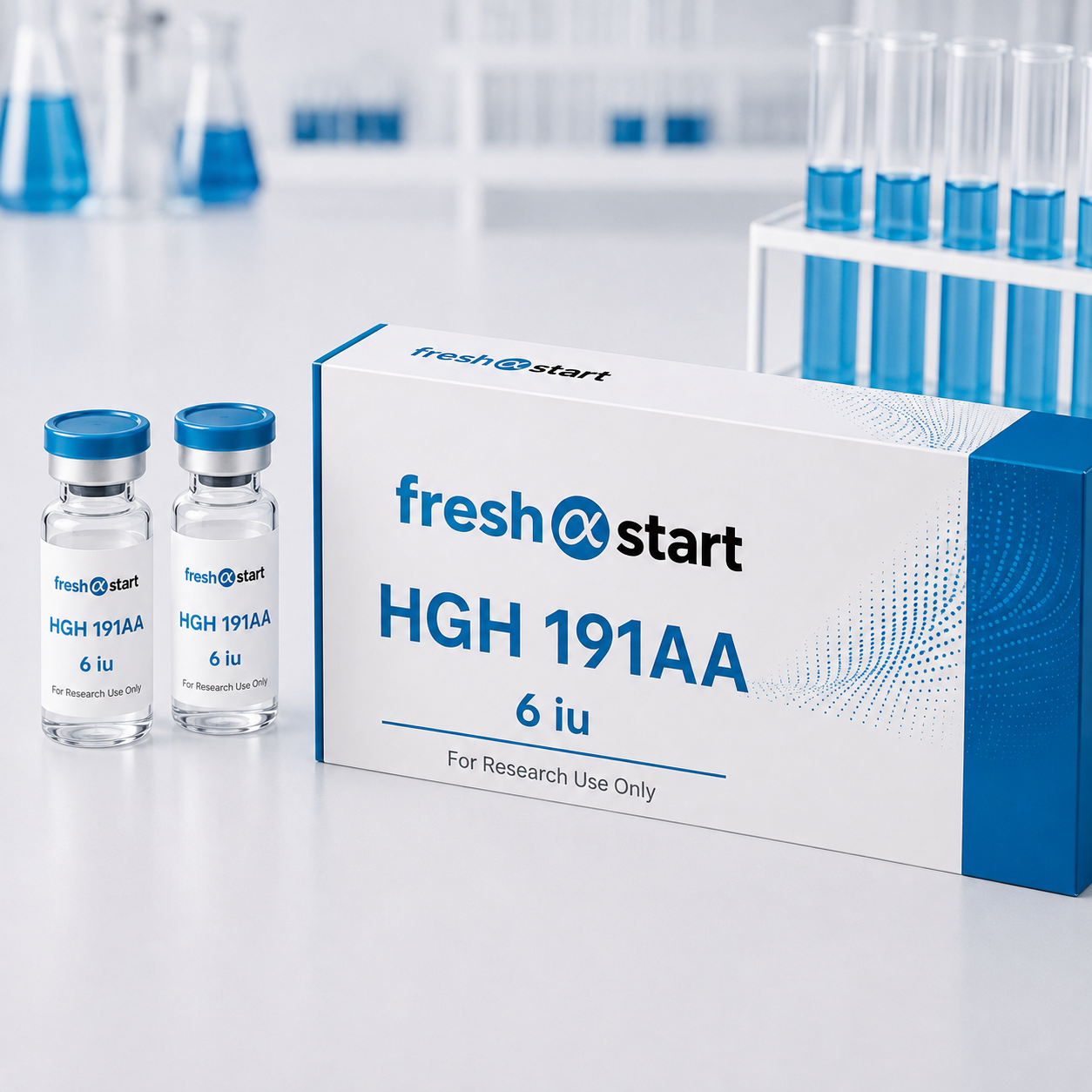
HGH 191AA
CAS No: 12629-01-5
Strengths Available: 6 iu /8 iu/10 iu/12 iu/15 iu/20 iu
Format: Sealed containment / vial presentations available
Volume: 3mL
What This Product Is About
HGH 191AA is the full-length recombinant form of human growth hormone, containing the same 191-amino-acid sequence as naturally occurring pituitary growth hormone.
Description
What is HGH 191AA?
HGH 191AA is a recombinant protein hormone that activates the growth hormone receptor and influences growth, metabolism and tissue development.
Why Researchers Became Interested in HGH 191AA
Researchers became interested in HGH because of its central role in growth, body composition, protein metabolism and IGF-1 signalling.
Key Research Focus Areas
- Growth hormone signalling
- IGF-1 production
- Growth and development
- Protein metabolism
- Muscle and bone biology
- Fat metabolism
- Growth hormone deficiency
- Endocrine research
What the Research Has Shown
Research has established that somatropin activates the growth hormone receptor and increases IGF-1 production, influencing growth and metabolic processes. Recombinant somatropin has also become an established prescription treatment for several recognised growth-hormone-related conditions.
Scientific Background and Research Context
HGH 191AA refers to the full-length form of human growth hormone, also known as somatotropin. It is a single-chain protein composed of 191 amino acids and contains two disulfide bonds that help maintain its three-dimensional structure. This corresponds to the principal 22-kDa form of growth hormone naturally produced by somatotroph cells in the anterior pituitary gland.
Natural growth hormone secretion occurs in pulses and is influenced by sleep, exercise, nutritional status, age and stress. Its release is primarily stimulated by growth hormone-releasing hormone and ghrelin, while somatostatin suppresses it. Recombinant somatropin can be manufactured with the same 191-amino-acid sequence as pituitary-derived human growth hormone.
Exploring the Science Behind
Research focuses on how HGH 191AA binds to the growth hormone receptor found in the liver, muscle, bone, adipose tissue and other organs. Receptor activation initiates intracellular signalling, particularly through the JAK2–STAT5 pathway. This influences the expression of genes involved in growth, cellular development, protein metabolism and IGF-1 production.
Growth hormone produces both direct and indirect biological effects. Its direct actions include influencing amino-acid uptake, protein synthesis and fat mobilisation. Its indirect growth-promoting effects are largely mediated through insulin-like growth factor 1, or IGF-1, which is produced mainly in the liver but is also generated locally in tissues such as bone and muscle.
The relationship between growth hormone and IGF-1 is carefully regulated through feedback mechanisms. Rising IGF-1 levels can reduce further growth hormone secretion at the pituitary and hypothalamic levels, helping maintain endocrine balance.
Research Context in Endocrine and Metabolic Science
HGH 191AA is widely studied as part of the growth hormone–IGF-1 axis, one of the principal endocrine systems involved in postnatal growth and tissue metabolism. In paediatric research, attention centres on linear growth, growth-plate activity, bone development and disorders associated with insufficient growth hormone signalling.
In adult metabolic research, growth hormone is examined for its influence on body composition, lean tissue maintenance, lipid mobilisation and protein turnover. Growth hormone can stimulate lipolysis, releasing fatty acids from adipose tissue for use as an energy source. It can also support nitrogen retention and cellular protein synthesis.
Its relationship with glucose metabolism is more complex. Growth hormone may reduce insulin sensitivity under certain conditions, while IGF-1 can produce insulin-like metabolic effects. Researchers therefore study the balance between growth hormone, IGF-1, insulin, nutrition and circulating fatty acids rather than viewing growth hormone as acting independently.
Ongoing Scientific Interest
Scientific interest continues around the molecular regulation of growth hormone receptors, IGF-1 production and tissue-specific responses to growth hormone signalling. Research is examining how age, sex hormones, sleep, exercise, nutritional status and body composition affect the activity of the GH–IGF-1 axis.
Other areas of investigation include skeletal and muscle metabolism, tissue maintenance, mitochondrial function and changes associated with growth hormone deficiency or excess. Researchers are also exploring why individuals respond differently to growth hormone signalling and how receptor sensitivity, binding proteins and genetic factors influence biological activity.
HGH 191AA is an established subject of endocrine research, but the term describes its amino-acid structure and does not by itself establish a product’s identity, purity, safety or clinical suitability. Medical use of recombinant human growth hormone is limited to recognised indications and requires appropriate diagnosis, monitoring and professional supervision.
Ingredient Profile
Single research compound: HGH 191AA
CAS: 12629-01-5
Supplied as lyophilised powder (no excipients, fillers or additives).
Active Ingredients
HGH 191AA— 6 iu /8 iu/10 iu/12 iu/15 iu/20 iu
Ingredient Breakdown
HGH 191AA : 6 iu /8 iu/10 iu/12 iu/15 iu/20 iu of active peptide per vial (lyophilised).
Why is HGH 191AA studied in metabolic research?
HGH 191AA is studied because growth hormone influences protein synthesis, fat metabolism, glucose regulation and IGF-1 signalling.
Is HGH 191AA approved for medical use?
Yes. Somatropin is an approved prescription medicine for specific indications, including certain forms of growth hormone deficiency. Approved uses vary by country and product.
Why does purity matter so much for this product?
High purity and correct protein structure are important for reliable biological activity and consistent laboratory results.
What does “research grade” mean?
Research grade means the material is intended for laboratory or analytical research and should not automatically be considered pharmaceutical grade or suitable for human administration.
Is international supply available?
International availability depends on the supplier, product classification, destination country and applicable pharmaceutical or research-material regulations.
Research & laboratory use only. Not for human or veterinary use. Not a medicinal product, supplement, food or medical device. No therapeutic, diagnostic, cosmetic, wellness or lifestyle claims are made or implied. Analytical reference/click information is a laboratory measurement aid only and must not be applied to living systems.
Typically supplied at >99% purity, supported by batch-specific analytical data. UK-based preparation, analysis and release under scientist-led, GMP-aligned processes with full batch-level traceability. Certificate of Analysis (CoA) available on request; independent analytical verification where appropriate.
Store the lyophilised powder refrigerated at 2–8°C, protected from light and moisture; suitable for longer-term storage frozen at -20°C. Handle under appropriate laboratory conditions. For in vitro research use only.
For in vitro laboratory research only. Reconstitution, handling and experimental design at the discretion of the qualified researcher. The 300-click sealed-containment system is an analytical measurement reference only and does not represent dosing or administration guidance. Not for use in living systems.
Partner with FreshstartPharma– Where Accuracy Meets Innovation
Freshstartpharma is committed to delivering high-quality research-grade products designed for advanced scientific applications. We offer wholesale partnerships to selected businesses that share our values of integrity, quality, and innovation. Whether you’re an established distributor or an emerging research supply company, we invite you to join our network and benefit from exclusive access to our state-of-the-art product range.